Insights
Types of Property Restoration Emergencies: A Clear Guide
Discover the types of property restoration emergencies you might face. Learn how to react quickly to safeguard your property and minimize damage.
Types of Property Restoration Emergencies: A Clear Guide
Property restoration emergencies are distinct categories of urgent damage events that threaten a property’s safety, structure, and habitability and require fast, expert intervention to minimize lasting harm. The five main types of property restoration emergencies are water damage, fire and smoke damage, mold infestations, biohazard contamination, and storm or wind damage. Each category demands a different set of certified professionals, specialized equipment, and response protocols. Metropolitan response times average 60 minutes for high-priority calls like burst pipes or structural failures. Knowing which type of emergency you face determines every decision that follows.
1. What are the types of property restoration emergencies?
The restoration industry organizes urgent damage events into five recognized categories. Each type carries its own risk profile, regulatory requirements, and treatment timeline. Misidentifying the category is the most common mistake property owners make, and it leads to hiring the wrong contractor or delaying the right one.
Emergency restoration occurs in phases: immediate stabilization in the first 24 hours, short-term mitigation over days 1–3, and full restoration over days to weeks. Skipping or rushing the stabilization phase can increase total restoration costs by 20–50%. The five categories below map directly to that phased response model.
2. Water damage emergencies and how they are handled
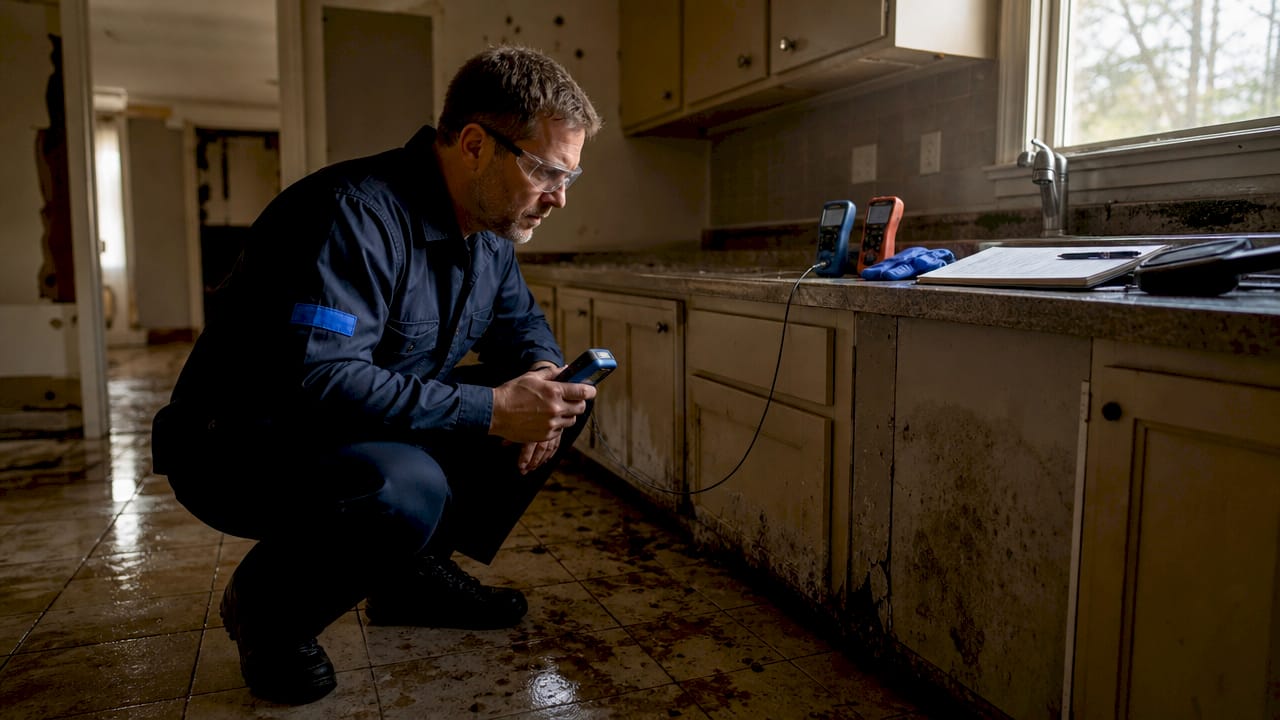
Water damage is the most common property restoration emergency. It originates from burst pipes, appliance leaks, roof failures, and flooding. The critical factor is not just the volume of water but its contamination level.
Water damage is classified into three categories:
Category 1 (clean water): Originates from supply lines or rain. Lowest health risk. Standard drying protocols apply.
Category 2 (gray water): Comes from washing machines, dishwashers, or sump pump failures. Contains biological contaminants. Requires antimicrobial treatment.
Category 3 (black water): Sewage, floodwater, or any water that has sat long enough to become grossly contaminated. Requires hazardous waste protocols and full PPE.
Immediate response steps include water extraction, structural drying with industrial dehumidifiers, and moisture mapping. Delayed action allows mold to establish within 24–48 hours and causes structural wood to swell and warp. Treating Category 3 water without proper protocols risks both health consequences and regulatory violations.
Pro Tip: Save the failed pipe section, broken appliance hose, or any component that caused the water event. Your insurance adjuster needs physical evidence of the root cause to approve the claim. Disposing of it early can delay or reduce your payout.
3. How fire and smoke damage emergencies differ from each other
Fire damage and smoke damage are two separate problems that require two separate treatment approaches. The fire itself destroys materials through heat and combustion. Smoke and soot, however, penetrate porous surfaces, travel through HVAC systems, and cause ongoing chemical damage long after the flames are out.
Fire damage restoration covers not just fire effects but smoke residue, soot removal, and water damage from firefighting efforts, requiring specialized chemicals and odor control methods. That water damage from suppression hoses adds a second emergency layer on top of the fire event. A property owner dealing with fire damage is often managing two simultaneous restoration categories at once.
Emergency steps for fire and smoke damage include:
Board-up and roof tarping: Secures the structure against weather and unauthorized entry immediately after the fire is extinguished.
Soot removal: Dry chemical sponges and HEPA vacuums remove loose soot before wet cleaning begins. Wet cleaning soot without this step drives it deeper into surfaces.
Odor neutralization: Odor removal often uses hydroxyl generators or ozone treatment after structural repairs are complete.
Content pack-out: Salvageable belongings are removed, cataloged, and cleaned off-site to prevent further smoke absorption.
Pro Tip: Do not run your HVAC system after a fire. Smoke particles in the ductwork will redistribute throughout the entire property, contaminating rooms that the fire never reached.
4. When mold infestations become emergencies
Not every mold problem is an emergency. A small patch of surface mold in a bathroom grout line is a maintenance issue. Mold becomes a restoration emergency when it follows a water damage event, covers a large area, or affects HVAC systems and structural materials.
Mold grows rapidly in warm, humid conditions. After a water intrusion event, visible mold can appear within 24–48 hours. At that point, the health risks escalate quickly, particularly for occupants with respiratory conditions, allergies, or compromised immune systems.
Mold remediation requires containment barriers, negative air pressure, HEPA vacuuming, and independent verification per IICRC S520. Many states also require licensed mold remediation contractors. Key steps in emergency mold remediation include:
Containment: Plastic sheeting and negative air pressure machines isolate the affected area and prevent spore migration.
HEPA filtration: Air scrubbers with HEPA filters run continuously during remediation to capture airborne spores.
Material removal: Porous materials like drywall and insulation that are heavily colonized must be removed and disposed of properly.
Post-remediation verification: An independent industrial hygienist tests air and surface samples before the area is cleared for reconstruction.
Attempting mold remediation without containment spreads spores to clean areas, turning a localized problem into a whole-property issue.
5. What biohazard emergencies occur in properties?
Biohazard emergencies are the most regulated category of property restoration. They include sewage backups, trauma scenes, hoarding situations with biological waste, and infectious disease contamination. These events require a level of personal protective equipment and disposal compliance that no general contractor is equipped to provide.
Biohazard emergencies such as sewage backups require EPA and OSHA compliance, specialized PPE, and licensed contractors to safely handle health risks. General contractors lack both the expertise and regulatory clearance for biohazard remediation. Hiring the wrong service provider exposes you to liability and leaves the property unsafe.
Key distinctions of biohazard restoration include:
Regulatory compliance: Licensed biohazard contractors follow EPA, OSHA, and state-specific disposal regulations for biological waste.
Specialized PPE: Full Tyvek suits, respirators, and double-bagged biohazard waste containers are standard.
Decontamination verification: Third-party testing confirms the area is safe before re-occupancy.
Pro Tip: Never attempt to clean a sewage backup yourself with household disinfectants. Sewage contains pathogens including E. coli, hepatitis A, and norovirus. The exposure risk is immediate and serious.
6. How storm and wind damage emergencies impact properties
Storm and wind damage emergencies cover a wide range of scenarios: roof failures, broken windows, fallen trees on structures, flooding from storm surge, and siding breaches. The defining characteristic is that the property is now exposed to the elements, and every hour of delay compounds the damage.
Storm damage emergencies require immediate stabilization including roof tarping and board-up services to prevent further exposure and structural deterioration. A compromised roof during a rain event can turn a wind damage claim into a combined wind, water, and mold claim within 48 hours. Speed of response directly controls the final restoration cost.
Common storm damage scenarios and their immediate responses:
Storm Damage Type | Immediate Stabilization Action |
|---|---|
Roof breach or missing shingles | Emergency roof tarping |
Broken windows or doors | Board-up with plywood or security panels |
Fallen tree on structure | Debris removal and structural shoring |
Basement or crawlspace flooding | Water extraction and sump pump deployment |
Siding breach | Temporary weatherproofing wrap |
Homeowners must perform emergency mitigation actions like shutting off water and roof tarping but must avoid permanent repairs before an insurance inspection to protect their coverage. Document every mitigation action with photos and retain itemized receipts for all labor and materials. That documentation is your claim.
Key takeaways
The five types of property restoration emergencies each require a different certified response, and misidentifying the category is the single most costly mistake a property owner can make.
Point | Details |
|---|---|
Five distinct emergency types | Water, fire and smoke, mold, biohazard, and storm damage each need specialized contractors. |
Response speed controls cost | Delayed stabilization can increase total restoration costs by 20–50%. |
Category 3 water is a biohazard | Black water requires hazardous waste protocols, not standard drying equipment. |
Mold follows water damage fast | Visible mold can appear within 24–48 hours of a water intrusion event. |
Document before you repair | Retain receipts, photos, and failed components before insurance inspection to protect your claim. |
What I’ve learned about property emergencies after years in the field
The biggest problem property owners face is not the damage itself. It is the gap between what they think they need and what the damage actually requires. A homeowner who calls a general plumber for a sewage backup, or a handyman for post-fire cleanup, is not just wasting time. They are creating liability and potentially voiding their insurance coverage.
The second mistake I see constantly is confusing mitigation with restoration. Stopping damage spread is the immediate priority, not completing repairs. Property owners who push contractors to skip straight to drywall and paint end up with hidden moisture, mold behind walls, and warranty disputes six months later.
The third issue is documentation. Most property owners do not photograph the damage before mitigation begins, and they throw away the failed component that caused the event. Retaining failed components is critical for insurance root cause investigations. A burst pipe section or a failed water heater valve is physical evidence, and discarding it is a claim risk.
My honest advice: treat the first 24 hours as a triage phase. Stop the active threat, document everything, and call a certified restoration contractor who matches the specific damage category. The IICRC maintains a public directory of certified firms by specialty. Use it.
— Jeff
When a property emergency strikes, Onsiteai answers
Property emergencies do not follow business hours, and neither does Onsiteai. Onsiteai is a 24/7 AI-powered emergency call answering service built specifically for restoration companies, contractors, plumbers, and property management firms. When a property owner calls at 2 a.m. with a burst pipe or a post-storm roof breach, Onsiteai captures the critical job details, determines urgency, and immediately contacts the on-call technician.
Onsiteai delivers instant response times, detailed call summaries, and SMS and email notifications so your team never misses an urgent job. For restoration companies that want to capture every after-hours emergency call, Onsiteai is the direct connection between a distressed property owner and the right professional response.
FAQ
What are the main types of property restoration emergencies?
The five main types are water damage, fire and smoke damage, mold infestations, biohazard contamination, and storm or wind damage. Each requires a different set of certified professionals and response protocols.
How quickly should a restoration company respond to an emergency?
Metropolitan response times average 60 minutes for high-priority events like burst pipes or structural failures. Delays beyond the first 24 hours significantly increase the risk of secondary damage and higher restoration costs.
Can I do emergency property repairs myself before the insurance adjuster arrives?
You can and should perform immediate mitigation actions like shutting off water or tarping a roof breach. Avoid permanent repairs before the insurance inspection, and retain all receipts and failed components to protect your claim.
What is the difference between mitigation and restoration?
Mitigation stops damage from spreading, such as extracting water or boarding up windows. Restoration returns the property to its pre-loss condition. These are two separate phases, and skipping mitigation to rush restoration creates hidden damage and warranty issues.
Why can’t a general contractor handle biohazard or mold emergencies?
Biohazard and mold remediation require specialized licensing, EPA and OSHA compliance, and equipment like HEPA air scrubbers and negative air pressure systems. General contractors are not certified for these categories, and using them risks health violations and insurance complications.
Recommended
Keep Exploring OnSite AI Resources
Practical emergency-response insights for service contractors.